

Charity for Social Change
Tuesday, 26 March 2013
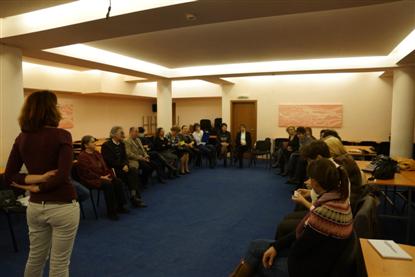
On March 15th and 16th in Sofia was held a fundraising training, organized by Platform AGORA with more than 30 Chitalishte representatives. Ms. Krasimira Velichkova, Chairperson of Bulgarian Donors' Forum was trainer in the two day event.
At the start of the work program, Krasimira Velichkova talked more about the donors' practices in Bulgaria, for the official data in this field, shared experience and presented fundraising mechanisms.
Accent in the program was the process of drafting the steps of a fundraising plan. A minimum of 10 compulsory steps that constitute the basis of the plan were drafted: clear identification of the cause worth funding, description and analysis of past experience, building a team. Naturally, among the most important steps in the planning process are: clear strategic and financial goals, the schedule and priority actions, success criteria and last but not least - attention to detail.
Later on, the participants brainstormed and came out with more than 15 mechanisms for successful fundraising among which the traditional boxes for donations, charity events and sales, announcement in the media, but also pointed out the less applied such as payroll giving, personal letters and invitations for donations, donors ambassadors who contributed and motivated other to donate, too.
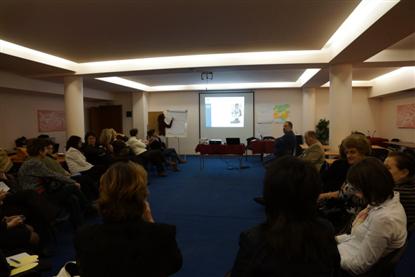 Within the two day meeting some participants had the opportunity to share a dream - who is their 'dream donor'. What are his/her characteristics, what is he/she doing for living? It turned out that the dream goes like this: big companies that have their own giving policy, also individual donors or managers who appreciate the cause or are close to the community they support. The importance of the mutual interest was pointed out as well as the pleasure of giving and receiving for both donor and beneficiary. This inspiring exercise was followed by a challenging 'reality', namely a role game where the participants had to ask business organization for donation.
The role game identified several problems related with communication, more specifically how to communicate with the potential donors. It became clear that among the applied tools/channels are: quiz, boxes for proposals, book for sharing and opinion, internet networks, electronic and print media, information plates, partnership networks. Last but not least, the Chitalishte Board of Trustees was mentioned as a resource. Usually, the Board members are prominent local figures whose identification with the Chitalishte Board of Trustees would be of benefit to the institution. That is why the participants were reminded to 'demand' that from their Board members.
The two day training was closed with brief summary of the work done and knowledge gained but also with promises to apply it in practice.
Back